

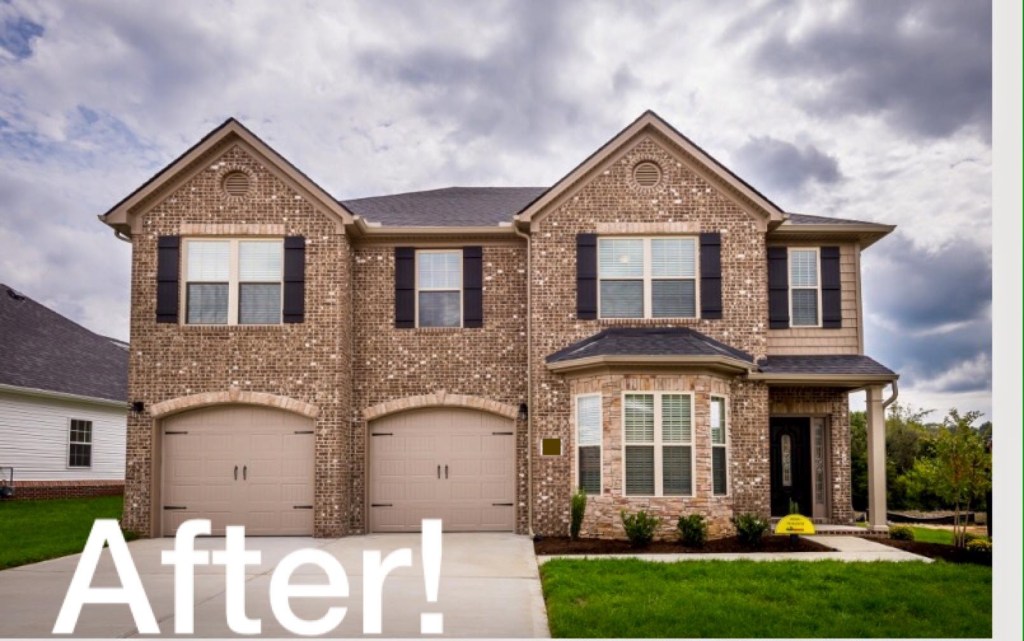
Thanks for returning to my story! Just a quick recap – In 1997, I moved to Tennessee and bought my first house. In 2015, I decided to buy new construction in a subdivision that was being built. There was nothing but an empty lot when we started so I was a part of the process from start to finish and since I knew NOTHING about what it takes to build a home, I wanted to share with you what I learned.
Most people don’t know they can have a real estate agent represent them when buying new construction and I cannot emphasize how important that is. I was not in real estate when I purchased my home and my agent was indispensable. He reviewed the contracts, asked the questions I didn’t know to ask, laid out what the next steps were, went with me to selections, and checked on the site construction weekly. I could have just used the builder’s agent but I would not have had the support, experience, and advocacy that my own agent provided.
First, every builder is different and a lot has changed since I bought my home – COVID and the supply chain issues – so my process might not be exactly yours but the overall process is pretty standard. Once you sign a contract with a builder, they have a “roadmap” to closing with milestones outlined and you want to really pay attention and ask a lot of questions. Be involved.
We chose the home plan, then the lot, and made any changes we wanted to the layout. Changes can increase the price of the home but many builders have these types of exceptions built in and they should be discussed up front so there are no surprises later. They will give you dates after which no changes can be made.
There is a pretty long period before your house looks like it’s becoming a house. They have to dig and install plumbing and all the systems that your house will need. During that time, I drove by the site weekly. It felt like it was taking forever to see a wall or even a board go up but then one day, they were there. As I said, my agent was also driving by weekly and as the walls started appearing, we were both coming by on different days so the site was being observed twice a week. Once we had walls, sub-floors, and stairs, we went inside.
Now remember, this is a construction site. Be respectful of the builder’s crews and the possibly dangerous conditions. Do NOT get in their way or interfere with their process. I would not even stop them and ask questions. I spent about 15 – 20 minutes walking through the house checking on the progress. If I had questions or didn’t understand something, I would text the supervisor that was assigned to me and ask if I could talk with him or meet him at the site. He was very helpful and patient and, I think he was the reason I felt the quality of our home was excellent.
A few months in, we made our design choices at the builder’s selections office. We chose paint color, appliances, granite, cabinets, backsplash, carpet and flooring, tile, grout color for the different tiles, stair ballisters (wood or iron), and what felt like an infinite number of additional details. Most builders have an allowance for this but if you want higher-end finishes or hardwoods throughout the home, for example, it may increase the price of the home. I love this type of thing but it was exhausting. Many builders limit your selections to the major items and I don’t think that’s a bad thing. Did I really care what color the grout was? No, but I did care about the granite and the type/color of the cabinets. Some builders even pick almost everything but allow you to pick the paint color – tan or gray – and then they choose the other items to go with the paint color and that’s it. Ask lots of questions before you sign a contract so you will know what to expect.
Again, as construction progresses, go a couple of times a week, at different times of the day. During a visit, after the crews were gone, my agent found the water was left dripping while they were testing a bathtub upstairs and it had overflowed, coming through the garage ceiling. I was able to call the supervisor and get it taken care of quickly. Sometimes, it’s simple things you notice – like a cabinet door installed backward. It is so much easier to deal with now rather than later.
A building inspector will check your home to see that everything is up to code before a certificate of occupancy can be issued. You can and should have a home inspection by a licensed home inspector who will check that the systems are all working correctly. Everyone makes mistakes. Inspectors have shared stories of small installation errors that might not be seen with a walk-through but that would have caused big problems later.
Within a day or two of closing, you will have a final walk-through. The house is technically complete. This is where you need to identify any little (or big) things that need to be addressed before closing. Now, I am not a detail person. Bring someone who IS a detail person with you. I brought my agent whom I would call “nit-picky”. Yet another reason why I love him. We really didn’t have many issues but he noticed things I never would have. I did notice an orange stain on the granite in the kitchen. It was noted and they actually spent months trying to remove the stain before replacing the granite.
As I said in the previous post, I closed 3 weeks into December after 7 months of construction and started moving in during the days that followed. Some people wouldn’t want all that disruption in their lives for that period of time. It’s like having a part-time job, checking on the home each week, but it was worth it to me to get the beautiful home I live in today. I would do it again in a heartbeat.
If you want to know more about the process of buying new construction, we can talk more about it over coffee or tea. Let’s discuss the different builders in the area (and the option of a custom home builder), and the need to have an agent representing you in the journey to a new construction home.

 Tere Sells Homes